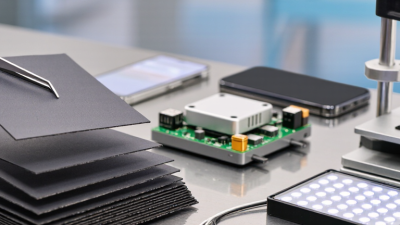
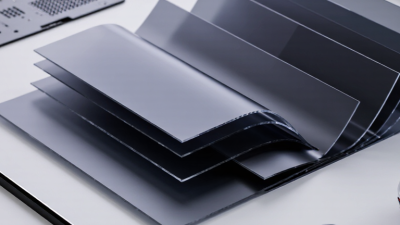
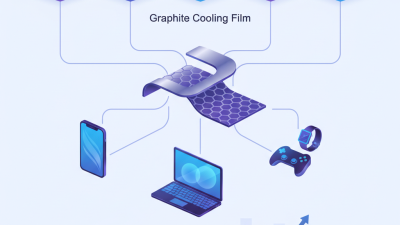
Thermal Graphite Film has become a practical solution for controlling heat in smartphones, tablets, laptops, cameras, and electric-vehicle electronics. Its thin graphite layers spread heat across a wider surface, reducing concentrated hot spots near processors and batteries. The material can fit inside narrow devices, sometimes with a thickness close to ordinary paper.
Professor Ali Shakouri, a recognized thermal-management researcher, has emphasized, “Thermal management is one of the key challenges in the development of future electronic systems.” That observation explains why manufacturers compete beyond simple conductivity figures. A reliable supplier must also control thickness, flexibility, surface treatment, electrical insulation options, and long-term performance. Factory consistency matters. A brilliant laboratory sample means little if production rolls vary from batch to batch.
This introduction examines the Top 10 Thermal Graphite Film Manufacturers Worldwide through practical industry criteria. These include manufacturing scale, research capability, product customization, quality systems, application coverage, and customer support. Public technical data will guide the comparison, but rankings should not be treated as absolute. Regional availability, purchasing volume, and device design can change the best choice.
Some companies lead in conductivity. Others provide better die-cutting, adhesive integration, or rapid prototyping. That difference is easy to miss. It matters during real assembly.
The market also deserves careful skepticism. Marketing claims may highlight peak in-plane conductivity while overlooking thermal resistance, compression behavior, or performance after repeated bending. Therefore, this overview focuses on usable evidence rather than impressive numbers alone. It may not answer every engineering question, but it offers a clearer starting point for evaluating global Thermal Graphite Film suppliers.
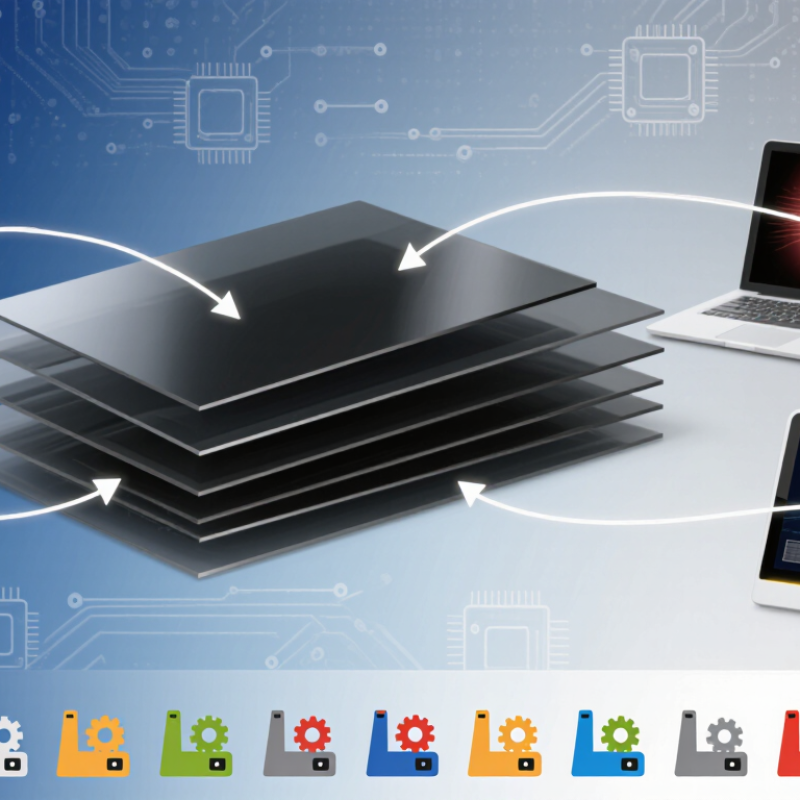
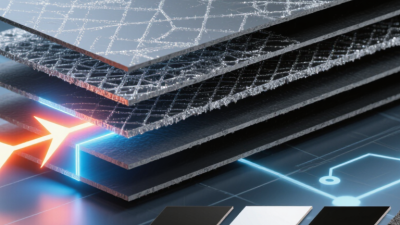
Thermal graphite film is a thin, flexible heat-spreading sheet made from highly oriented graphite layers. Its structure resembles stacked carbon flakes, with strong bonding inside each plane. Heat travels quickly across the surface, but much more slowly through its thickness.
Industry data from MarketsandMarkets’ 2024 thermal interface materials report places in-plane conductivity commonly between 300 and 1,500 W/m·K. Actual performance depends on density, thickness, and processing quality.
The film does not “remove” heat. It redirects heat from hotspots toward a larger area. This helps smartphones, laptops, battery modules, and compact control units reduce local temperature peaks. Technical reviews published by IDTechEx in 2024 identify flexibility, low mass, and electrical conductivity as major design advantages.
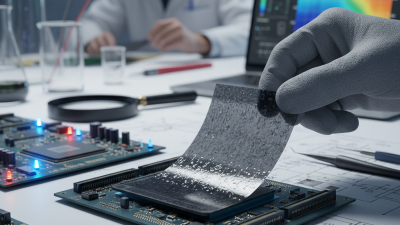
However, thermal resistance rises when air gaps, wrinkles, or poor contact remain. Testing only the raw sheet can therefore mislead engineers. Assembly conditions matter more than many product tables suggest.
Tips: Check both in-plane and through-plane values. Measure the finished assembly, not only the material. Keep the film flat and avoid sharp bends near heat sources. A copper layer may improve spreading, but it also adds weight and cost. One limitation remains easy to overlook: graphite film conducts electricity. Insulating layers may be necessary. Performance claims should be verified under realistic pressure, temperature, and cycling conditions. Reported numbers are useful, but they are not universal.
Assessing thermal graphite film manufacturers worldwide requires more than comparing thermal conductivity numbers. Check whether the reported value is in-plane or through-plane. These figures serve different cooling designs. Request data for thickness tolerance, density, compressibility, and thermal resistance. A 25-micron film may perform differently after bending, cutting, or lamination. Test samples under your own assembly conditions.
Manufacturing evidence matters. Ask for batch traceability, incoming-material controls, and documented process inspections. Reliable producers should explain how they manage coating uniformity, surface defects, and edge damage. Independent laboratory reports can support their claims, but test methods must match your application. Compare samples from several production lots, not one carefully selected piece. That step often reveals variation.
Look beyond the factory gate. Review packaging, moisture protection, export experience, and technical response time. A capable engineering team should discuss heat sources, contact pressure, insulation layers, and installation limits without making vague promises. Ask how rejected material is handled. Honest answers are valuable. No supplier is perfect. One uncomfortable gap in testing may matter more than an impressive brochure. Evaluate corrective-action records, quality certifications, and material declarations, while verifying that documents remain current. A practical scorecard should balance performance, consistency, communication, and supply stability.
A practical top-ten comparison should focus on verified capabilities, not marketing claims.
Manufacturer 1 leads in high-volume smartphone production, with stable 0.03-millimeter films and automated thickness checks.
Manufacturer 2 specializes in ultra-thin graphite for foldable devices. Its strength is controlled flexibility.
Manufacturer 3 serves automotive electronics, offering wider sheets, stronger dimensional stability, and batch traceability.
Manufacturer 4 focuses on custom die-cut parts for cameras, batteries, and compact processors. Tight tolerances matter here.
Manufacturer 5 develops high-conductivity films for heat spreading across uneven surfaces. Manufacturer 6 combines graphite with adhesive layers, reducing assembly steps during factory trials. Manufacturer 7 supports large-area applications, including displays and industrial control panels. Manufacturer 8 emphasizes flame-resistant constructions and documented material testing. Manufacturer 9 provides fast prototyping, which helps engineers compare thicknesses before volume orders. Manufacturer 10 competes through regional supply resilience, technical service, and shorter delivery cycles.
Real evaluation requires more than a datasheet. I would request thermal conductivity data, surface resistance, compression behavior, peel strength, and aging results. Test samples should be measured under the same pressure and temperature conditions. Small differences become important near processors and battery cells. One weakness remains common: published conductivity may not reflect installed performance. Contact gaps, adhesive layers, and bending can reduce heat spreading. Buyers should inspect production samples, not just laboratory figures. A supplier that explains limitations openly is often more dependable than one promising perfect results.
When comparing the world’s top ten thermal graphite film manufacturers, product performance depends on more than advertised thermal conductivity. Independent market research from Grand View Research identifies electronics cooling as a major growth area, driven by thinner devices and higher power density. In practice, engineers examine in-plane conductivity, thickness, compression recovery, electrical insulation needs, and surface flatness. A 25–50 micrometre film may spread heat across a smartphone frame, while thicker grades support battery modules and power-control assemblies. Small gaps still matter.
Applications vary by temperature, pressure, and available space. Thermal graphite films are used in smartphones, tablets, automotive displays, LED systems, servers, and battery packs. MarketsandMarkets reports continuing demand for thermal interface materials as data-center workloads expand. However, graphite is not automatically the best choice. It conducts heat efficiently along its plane, but poorly through its thickness. Designers must pair it with another interface material when heat must move vertically toward a heat sink.
Customization separates mature suppliers from simple converters. Options may include thickness control, die-cut shapes, adhesive layers, insulating coatings, multilayer laminates, and custom tab placement. ASTM-style thermal testing and consistent lot records improve purchasing confidence. Yet reported conductivity can vary with test method, pressure, and sample direction. That is easy to overlook. A useful qualification program should test parts after bending, aging, and repeated assembly, not only on a new laboratory sample. IDTechEx research also highlights growing interest in lightweight thermal solutions, although real-world durability remains an area requiring closer scrutiny.
Product Performance, Applications, and Customization Options
The chart presents representative in-plane thermal conductivity ranges for ten common thermal graphite film application groups. Values reflect commercially published industry ranges for synthetic, pyrolytic, natural, and composite graphite films rather than data from individual companies or brands. Actual performance depends on film thickness, density, orientation, surface treatment, adhesive integration, and customized die-cut or laminated construction.
Top 10 Thermal Graphite Film Manufacturers Worldwide?
A credible top-ten comparison needs more than conductivity claims. MarketsandMarkets’ 2024 Thermal Interface Materials report values the wider TIM market at roughly USD 4 billion. It forecasts growth beyond USD 6 billion by 2029. This expansion supports demand for thinner, repeatable graphite films. Still, graphite film is not a universal solution. It excels laterally.
Quality should include thickness tolerance, surface flatness, adhesive stability, and batch traceability. Ask for thermal data tested under defined pressure and temperature. ASTM E1461 and ASTM E1225 provide useful testing references, although results may differ between laboratories. A glossy datasheet is not proof. Request samples from three production lots. Check whether performance remains stable after repeated heating cycles.
Pricing depends on graphite grade, thickness, roll width, adhesive construction, and conversion yield. The lowest quotation can become expensive after die-cutting losses. Supply capacity also requires careful verification. Request monthly output, standard lead time, safety stock, and backup production sites. Yole Group’s 2024 thermal-management research highlights rising demand from mobile devices, telecom equipment, and electric power systems. These sectors punish inconsistent delivery. Public capacity figures are sometimes optimistic. A stronger selection uses landed cost, rejection rate, engineering support, and change-control discipline. No supplier wins every test. The ranking may change with the application.
| Rank | Anonymous Manufacturer Profile | Primary Production Region | Typical Thermal Conductivity In-Plane |
Typical Thickness Range | Maximum Typical Web Width | Indicative Price Range USD/m² |
Supply Capacity | Typical Lead Time | Quality and Certification Indicators | Best-Fit Applications | Key Selection Consideration |
|---|---|---|---|---|---|---|---|---|---|---|---|
| 1 | Large-scale integrated producer | East Asia | 700–1,500 W/m·K | 10–100 μm | 500–1,000 mm | 18–55 | Very high | 3–8 weeks | ISO 9001; lot-level thermal and thickness data; automotive documentation often available | High-volume smartphones, tablets, automotive electronics | Confirm capacity allocation and consistency between production lots |
| 2 | Premium high-conductivity specialist | Japan / East Asia | 900–1,800 W/m·K | 17–70 μm | 300–700 mm | 35–85 | High | 6–12 weeks | Tight thickness tolerance; advanced reliability data; strong process traceability | Premium mobile devices, high-power processors, compact heat spreaders | Prioritize measured thermal performance over catalog maximum values |
| 3 | High-volume cost-optimized producer | China | 500–1,200 W/m·K | 20–100 μm | 600–1,200 mm | 12–38 | Very high | 2–6 weeks | ISO 9001 commonly available; request RoHS, REACH, PFAS, and material declarations | Consumer electronics and standard thermal management parts | Evaluate price together with yield, flatness, and incoming inspection cost |
| 4 | Specialty flexible-film converter and producer | South Korea | 600–1,300 W/m·K | 18–80 μm | 400–900 mm | 24–62 | High | 4–10 weeks | Strong die-cutting, lamination, adhesive integration, and dimensional-control capability | Display modules, batteries, camera modules, wearable devices | Check adhesive thermal resistance and compression behavior after lamination |
| 5 | Industrial-grade graphite film producer | North America | 300–900 W/m·K | 25–125 μm | 300–800 mm | 45–110 | Medium to high | 6–14 weeks | Detailed engineering support; lot qualification and application testing commonly available | Industrial controls, telecom equipment, laboratory and power electronics | Useful where technical support and regional supply security outweigh unit price |
| 6 | European engineering-focused supplier | Europe | 400–1,000 W/m·K | 20–100 μm | 250–700 mm | 50–125 | Medium | 6–16 weeks | Emphasis on EU compliance, documentation, traceability, and custom converting | Automotive, aerospace-adjacent, medical, and industrial electronics | Verify whether quoted material is locally produced or imported and converted |
| 7 | Battery and power-electronics specialist | East Asia | 450–1,100 W/m·K | 25–100 μm | 400–900 mm | 20–58 | High | 4–10 weeks | Thermal cycling, compression, flammability, and electrical-insulation options may be available | Battery packs, power modules, charging equipment, and energy storage | Assess thermal spreading under mechanical pressure and cell-to-cell tolerances |
| 8 | Custom ultra-thin film developer | China / Taiwan region | 500–1,300 W/m·K | 8–50 μm | 200–600 mm | 30–95 | Medium | 8–18 weeks | Custom thickness, surface treatment, adhesive, and die-cut configurations | Space-constrained electronics, ultra-thin displays, compact sensors | Confirm minimum order quantity and tooling charges before design freeze |
| 9 | Regional mid-volume producer | Southeast Asia | 350–850 W/m·K | 30–120 μm | 300–800 mm | 22–60 | Medium | 4–12 weeks | Competitive converting and assembly; certification scope should be checked per product line | Regional electronics assembly, LED modules, networking equipment | Consider logistics, import duties, and backup production locations |
| 10 | Small-batch application engineering supplier | Global distribution / mixed sourcing | 300–800 W/m·K | 25–150 μm | 100–500 mm | 60–160 | Low to medium | 1–6 weeks for stocked grades | Fast prototyping, sample preparation, and engineering consultation; production audit recommended | Prototype builds, repairs, low-volume industrial products | Use for qualification and prototyping; validate direct factory traceability for mass production |