How to Use Natural Graphite Powder for Various Applications?
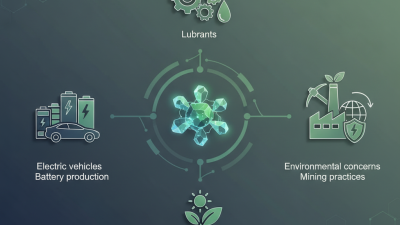
Natural Graphite Powder has become increasingly important in various industries. According to Dr. Emily Tran, a leading expert in materials science, “The versatility of natural graphite powder opens doors to numerous applications.” This statement highlights its significance in fields like electronics, battery production, and lubricants.
In the world of sustainable materials, Natural Graphite Powder stands out. It offers a unique balance of performance and eco-friendliness. Manufacturers utilize it in energy storage solutions, such as lithium-ion batteries, helping to reduce our carbon footprint. This is crucial in an era seeking cleaner technologies.
However, challenges remain. The supply chain for Natural Graphite Powder can be unpredictable. Quality control is vital, as inconsistencies can affect performance. Understanding these complexities is essential for anyone looking to harness the benefits of this remarkable material. With thoughtful application, Natural Graphite Powder can lead us towards innovative solutions, but we need to navigate its challenges carefully.
Understanding Natural Graphite Powder: Properties and Grades
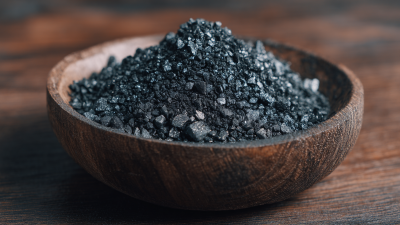
Natural graphite powder has unique properties that make it versatile for various applications. It is composed mainly of carbon and comes in different grades based on purity and flake size. These grades determine its suitability for specific uses. For instance, high-purity graphite is ideal for battery production, while lower grades perform well in lubricants. The ability of natural graphite to withstand high temperatures enhances its usefulness in industrial settings.
When using natural graphite powder, understanding its particle size is crucial. Finer powders are often preferred for coatings, providing a smooth finish. In contrast, coarser flakes offer better lubricating properties. However, achieving the right balance can be challenging. If the powder is too fine, it may clump. If it's too coarse, it may not adhere well. This area often requires experimentation to find the optimal formulation.
Another aspect to consider is the environmental impact of extraction methods. Some processes can harm ecosystems. Users must weigh these factors when sourcing natural graphite. Reducing waste during handling and processing is also important. These reflections can lead to more sustainable practices in the long run.
Key Applications of Natural Graphite Powder in Industry
Natural graphite powder plays a vital role in various industries. It is widely used in lubricants due to its high lubricating ability. The powder can reduce friction in machinery, enhancing performance and longevity. It creates a barrier that protects moving parts, but improper application can lead to slippage.
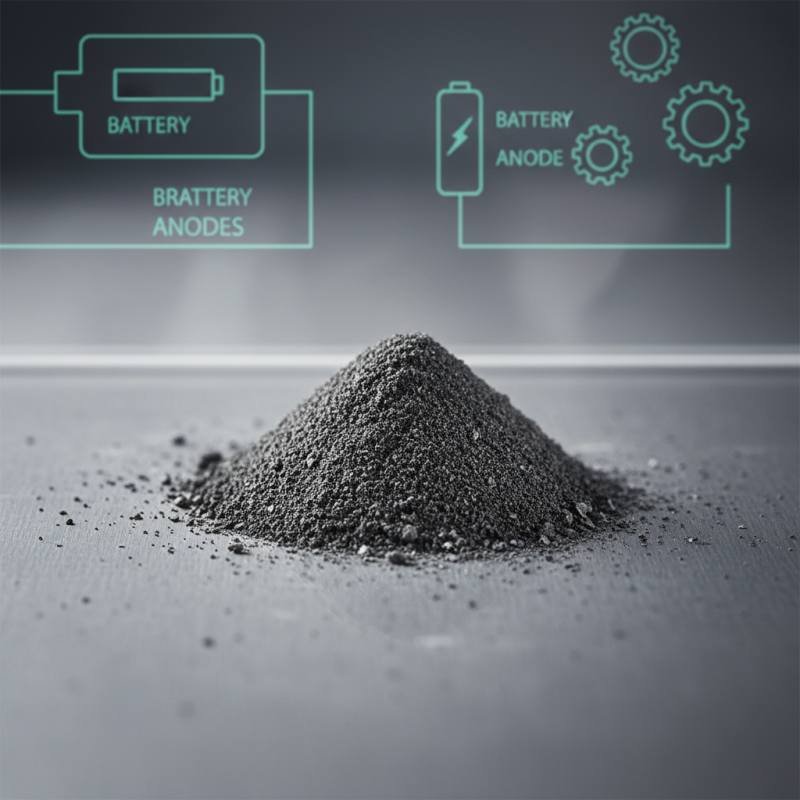
Another significant application is in batteries. Graphite powder is crucial for the production of lithium-ion batteries. Its conductive properties help in energy storage and release. However, sourcing quality graphite can be challenging. Some suppliers may not meet industry standards, requiring thorough vetting, which can be time-consuming.
In the field of powder metallurgy, natural graphite powder is essential for making various metal components. It helps in improving the strength and durability of products. However, achieving the right consistency and particle size can be tricky. If not processed correctly, it can compromise the final product. Each application has its challenges, demanding careful attention to detail.
Processing Techniques: How to Manufacture Natural Graphite Powder
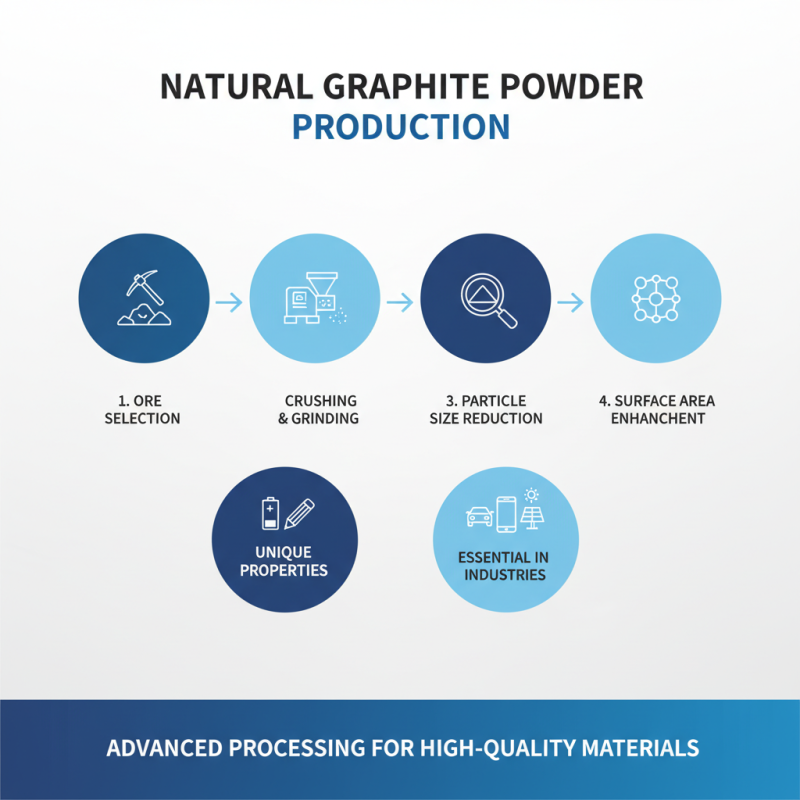
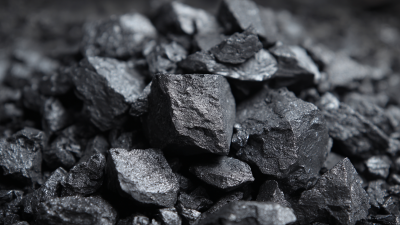
Natural graphite powder has become essential in various industries, driven by its unique properties. Producing this powder requires advanced processing techniques. The production begins with selecting high-quality graphite ore. Once chosen, the ore undergoes crushing and grinding. This step reduces particle size, enhancing the surface area.
Next, flotation separates graphite from other minerals. This method typically achieves about 85% purity. However, achieving higher purity levels often demands additional purification processes. For instance, chemical treatment can further remove impurities, although this may not always be cost-effective.
Heating processes are also pivotal. The treatment involves graphitization, which can enhance electrical conductivity. Data from the Global Graphite Market Report suggests that about 29% of natural graphite is used in batteries. This highlights the need for precision in manufacturing. Despite advancements, inconsistencies in particle size can lead to performance variability. Continuous improvement in processing techniques will be necessary as demand grows.
Performance Metrics: Evaluating the Effectiveness of Graphite Powder
Natural graphite powder is a versatile material used across multiple industries. Its unique properties make it suitable for various applications, including lubricants, batteries, and coatings. Evaluating its performance metrics is essential to understand its effectiveness in specific uses.
When assessing graphite powder, factors like particle size and purity matter significantly. Finer powders tend to have better performance in lubricating tasks. However, not all applications benefit from ultra-fine powders. In some cases, larger particles may provide more stability and enhance structural integrity.
Conducting thorough evaluations can reveal surprising results. Some users may expect graphite powder to perform uniformly well across all applications. In reality, its efficacy can vary greatly. Regular testing and adjustments are needed to optimize its use in different scenarios. Understanding these nuances can lead to better results but requires careful consideration and a willingness to adapt.
Performance Metrics: Evaluating the Effectiveness of Natural Graphite Powder
This chart illustrates the performance metrics of natural graphite powder across various applications, including its conductivity, lubricating properties, and thermal stability.
Future Trends in Natural Graphite Powder Usage and Market Demand
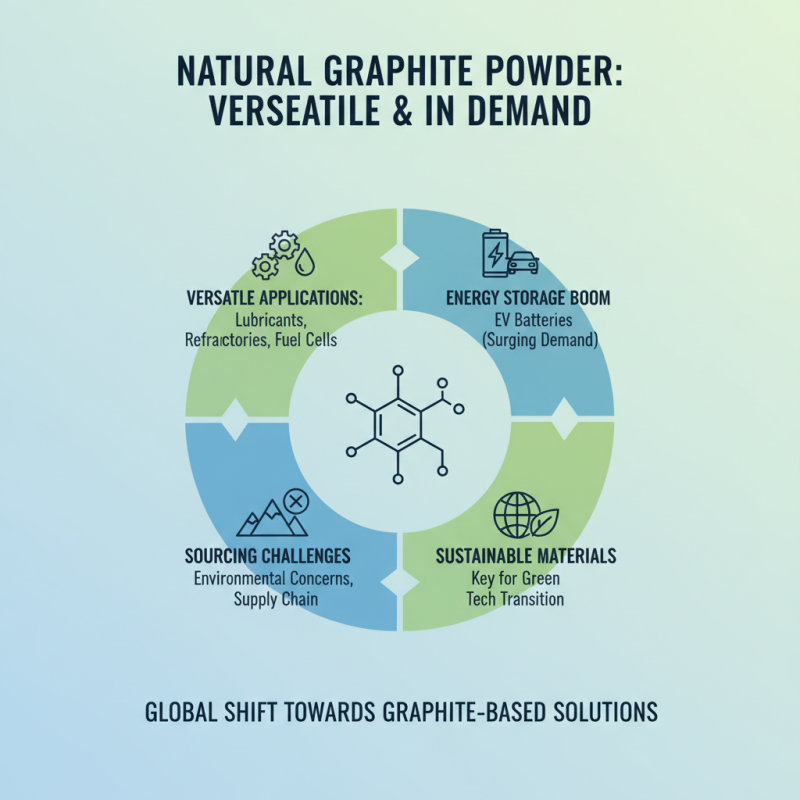
Natural graphite powder is gaining traction across various industries. This trend reflects its versatility in applications, from lubricants to batteries. As energy storage demands rise, the demand for graphite in electric vehicle batteries is surging. This shift highlights the increasing reliance on sustainable materials. However, there are challenges in sourcing natural graphite due to environmental concerns.
The future of natural graphite powder presents exciting opportunities. As industries push toward greener solutions, the market will adapt to these demands. Innovations in processing techniques may enhance purity and efficiency. Potential buyers will likely pursue ethical sourcing to align with sustainability goals. Yet, identifying reliable sources remains a complex task, requiring thorough research and diligence.
Investors are keenly observing these trends. Rising market demand may spur new entrants, leading to increased competition. This can bring better prices, but quality will vary. Balancing demand with environmental responsibility will be pivotal. Stakeholders must navigate these changes with caution, ensuring they meet market expectations while upholding ethical standards.