7 Tips for Choosing Natural Graphite Suppliers?
Choosing a Natural Graphite supplier can shape product quality, production stability, and long-term costs. The decision involves more than comparing prices or reading polished websites. A reliable supplier should provide consistent graphite grades, clear documentation, and practical support when specifications change.
In real purchasing work, small details often reveal larger risks. A sample may show excellent purity, while later shipments contain different flake sizes or moisture levels. Ask for recent laboratory reports, mining origins, processing methods, and batch records. Request samples from multiple lots, not only one attractive shipment. Transparency matters.
Look beyond promises. Check whether the supplier can explain carbon content, ash levels, particle distribution, and packaging conditions in plain language. Review export experience, quality controls, inspection procedures, and delivery performance. Independent testing can confirm important claims before a large contract is signed. It may feel slower, but delays are cheaper than rejected material.
Seven practical tips can help buyers compare suppliers with greater confidence. They cover technical specifications, traceability, communication, pricing, logistics, compliance, and long-term reliability. Some buyers focus too heavily on the lowest quotation. That mistake is understandable, yet it can hide testing fees, unstable supply, or costly rework. A thoughtful evaluation combines evidence with direct experience. Even strong suppliers deserve periodic review, because markets, equipment, and customer requirements change.

Supplier Qualification and Natural Graphite Product Verification
Choosing a natural graphite supplier requires more than comparing prices. Supplier qualification should connect documents with physical evidence. In practice, I have found that a polished presentation proves very little. Tip 1: Check the mine or processing source, ownership records, and supply-chain traceability. Ask whether each shipment can be linked to a production lot. Tip 2: Review quality procedures, equipment maintenance, worker training, and corrective-action records. A clean certificate is useful, but it is not enough.
Product verification should begin with a representative sample. Tip 3: Test fixed carbon, ash, moisture, flake size, and particle distribution through an independent laboratory. Compare those results with the supplier’s certificate of analysis. Small differences may reveal sampling problems. Tip 4: Request samples from several production lots, not just one carefully selected bag. Consistency matters more than a perfect first result. Tip 5: Inspect packaging closely. Damaged liners, moisture exposure, or unclear labels can affect material performance.
Ask how the supplier handles rejected material and specification changes. Tip 6: Confirm written controls for batch identification, retention samples, and complaint response. Tip 7: Conduct a remote or on-site audit when volumes justify it. I once underestimated storage conditions during a review, and later testing showed higher moisture than expected. That mistake was avoidable. Supplier qualification is never completely flawless; it needs periodic testing, documented evidence, and honest reassessment.
Purity, Flake Size, Grade Options, and Application Compatibility
Choosing a natural graphite supplier starts with verified purity, not a polished sales sheet. Ask for recent certificates of analysis and test methods. Purity should match the process, since ash can affect conductivity, lubrication, and thermal performance. Request a retained sample from the same production lot. Compare its color, moisture, and visible mineral content. Simple checks help, but they are not enough. An independent laboratory can confirm fixed carbon, ash, sulfur, moisture, and trace elements. Results should be traceable to a batch number.
Flake size deserves equal attention. Large flakes may improve conductivity or expandability, while fine grades can disperse more easily in coatings and compounds. Ask for a particle-size distribution, not only a label such as “large flake.” Sieve data, laser analysis, and microscopy can reveal differences between suppliers. A supplier with several grade options can adjust mesh, carbon content, and surface treatment for your process. More choices do not automatically mean better control. I once treated a narrow size range as ideal, then found it clogged a feeding line. That mistake changed our acceptance testing.
Application compatibility should be tested under real operating conditions. For refractory mixes, check thermal shock, packing density, and oxidation behavior. For conductive materials, measure resistance after mixing, pressing, and aging. For lubricants, examine settling, wear, and viscosity changes. Share your processing temperature, binder system, equipment, and storage conditions with the supplier. Reliable suppliers answer with data, limitations, and a practical sampling plan. Test it. A small trial can expose problems that technical documents miss.
Mining Origins, Processing Methods, and Supply Chain Transparency
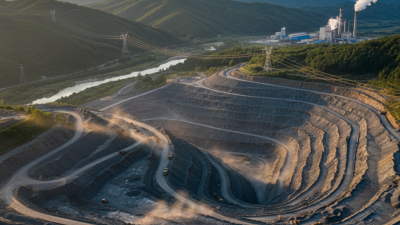
Choosing natural graphite suppliers requires more than checking price and flake size. Start by tracing the mining origin. The USGS Mineral Commodity Summaries 2024 estimated global natural graphite mine production at about 1.6 million metric tons in 2023. China supplied roughly three quarters of that volume. This concentration creates supply risks. Ask for the mine location, ownership structure, export route, and production year. A supplier with precise answers usually maintains stronger records.
Then examine processing methods.
Confirm whether the material is upgraded through flotation, thermal treatment, or chemical purification. Request test results for carbon content, ash, moisture, particle size, and impurities. Battery applications need tighter controls than refractories. The International Energy Agency reported in Global Critical Minerals Outlook 2024 that China performs more than 90% of global graphite refining. Therefore, “mined elsewhere” does not always mean “processed elsewhere.” That detail is often missed.
Supply-chain transparency should be tested, not assumed. Review chain-of-custody documents, batch numbers, independent laboratory reports, and audit dates. Compare shipment records with stated production capacity. Ask whether water use, tailings storage, and worker safety are independently monitored. The OECD Due Diligence Guidance offers a useful framework for mineral-risk screening. Still, no audit is perfect. Documents can be incomplete, outdated, or overly polished. Keep a written scoring sheet covering origin, processing, quality consistency, traceability, environmental controls, delivery reliability, and corrective-action history. A small sample shipment may reveal more than a confident presentation.
Environmental Standards, Documentation, Communication, and After-Sales Support
Choosing a natural graphite supplier requires more than comparing price and particle size. Environmental claims need evidence, not polished wording. Ask the supplier to identify the mine, processing site, water controls, and waste-handling practices. Request current certificates, audit records, and environmental permits where appropriate. Standards can vary between regions. A document without scope, date, or issuing authority deserves careful review. Ask for evidence.
Reliable documentation should support traceability from raw material to shipment. Check batch numbers, test methods, laboratory names, and report dates. Material data should match the actual grade offered. In my procurement experience, vague answers often create larger problems later. Small gaps matter. If a supplier avoids a basic question, pause the evaluation. However, slow replies do not always indicate poor quality; technical teams may need time to verify details. Judge their clarity, accuracy, and willingness to correct mistakes. Use a written question list and compare responses fairly.
After-sales support begins before the purchase order. Discuss complaint handling, replacement procedures, and investigation responsibilities. Ask who reviews deviations and how quickly they provide findings. Request realistic response timelines. A supplier may promise flexibility, yet informal promises can disappear after delivery. Put service expectations in writing. Do not judge quality from one sample alone. Compare repeat-test results and shipment consistency. Leave room for doubt. This protects decisions when production conditions change or the first assessment proves incomplete.
7 Tips for Choosing Natural Graphite Suppliers
Environmental Standards, Documentation, Communication, and After-Sales Support
The chart shows the number of practical evidence items to verify in each supplier-selection area.
Review environmental certifications and permits, product and origin documentation, communication procedures,
and after-sales controls such as complaint handling, corrective actions, and lot traceability.