2026 Best Graphite Carbon Paper Types for Global Buyers?
Global buyers need more than a product name when evaluating Graphite Carbon Paper in 2026. They need consistent performance, documented specifications, and dependable supply. A sheet may look uniform under warehouse lighting, yet vary in thickness, density, surface finish, or electrical conductivity.
This guide examines the main Graphite Carbon Paper types used in thermal management, electrical insulation, sealing, laboratory work, and industrial processing. It considers flexible graphite sheets, impregnated grades, conductive papers, laminated materials, and customized formats. Each type serves a different purpose. Not every grade fits.
Real purchasing decisions involve more than technical data. Buyers must compare graphite purity, ash content, tensile strength, compression recovery, temperature resistance, and dimensional stability. Roll width matters. Packaging matters too. A poorly protected edge can arrive crushed after a long shipment. That small defect may delay production.
The discussion also considers supplier experience, testing records, traceability, and international documentation. Reliable manufacturers should provide updated datasheets, sample approval, inspection reports, and clear tolerances. Certifications can support confidence, but they should not replace independent verification. A certificate alone proves little.
Some recommendations will remain conditional. Application temperature, contact pressure, chemical exposure, and installation method can change the best choice. Cost comparisons may also be imperfect because freight, waste, and minimum order quantities differ between suppliers. Buyers should test representative samples before signing large contracts.
Careful selection reduces technical risk and purchasing surprises. It also supports safer, more predictable production across global markets. The right material is rarely the cheapest sheet. It is the one that performs consistently, arrives protected, and matches the real operating conditions.
Graphite Carbon Paper: Definition, Structure, and Core Properties
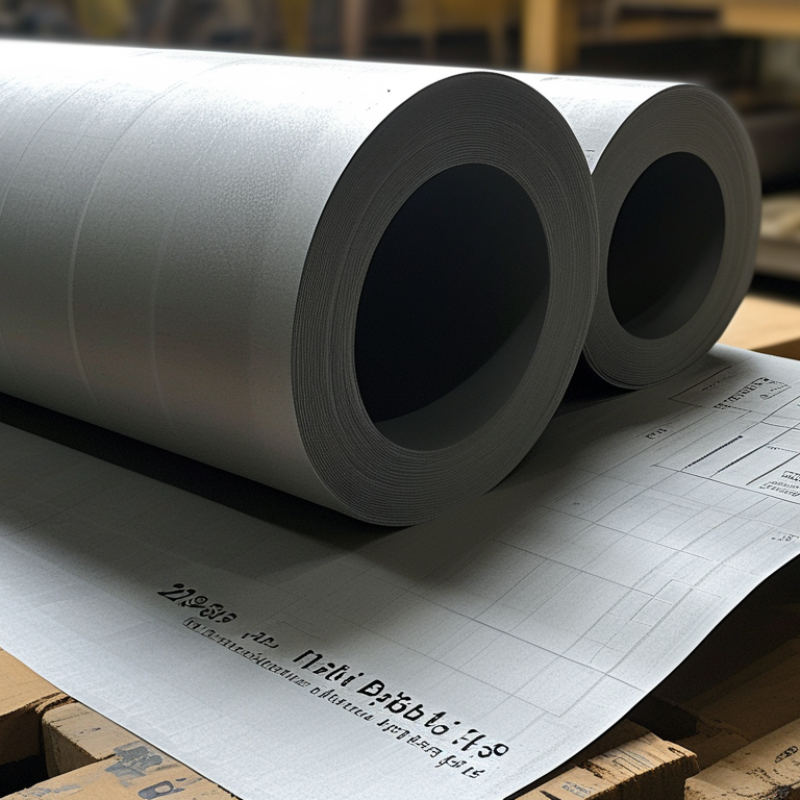
Graphite carbon paper is a thin, flexible carbon sheet made from expanded graphite flakes. Manufacturers compress these flakes into a continuous structure without traditional binders. Its carbon atoms form stacked, hexagonal layers. Strong in-plane bonding supports heat and electrical transfer, while weaker interlayer forces create flexibility and compressibility.
The structure explains its core performance. Graphite paper can conduct heat across a sealed interface and tolerate many corrosive chemicals. It also offers low friction, thermal stability, and useful sealing behavior. Density, thickness, ash content, and compression recovery strongly affect results.
The U.S. Geological Survey reported about 1.6 million tonnes of global natural graphite mine production in 2023. The International Energy Agency also identifies graphite as a major battery-material supply concern, with clean-energy demand expected to rise sharply by 2030.
For global buyers, “best” depends on the application. Dense grades suit thermal spreading and electrical shielding. Softer grades conform better to uneven surfaces. High-purity sheets are preferable near sensitive electronic components. Check thickness tolerance, in-plane conductivity, tensile strength, and outgassing data. Do not rely on density alone. That shortcut is tempting, but incomplete. I have found that installation pressure can change real-world performance more than a small conductivity difference. Testing under actual temperature, load, and moisture conditions remains necessary. Reported values can also vary between laboratories.
Main Types of Graphite Carbon Paper and Their Typical Uses
2026 Best Graphite Carbon Paper Types for Global Buyers
Graphite transfer paper is designed for tracing drawings onto wood, fabric, ceramic, or painted surfaces. Its coated side leaves a clean graphite line under moderate pressure. It works well for craft patterns and sign preparation. However, very smooth surfaces may produce weak marks.
Flexible graphite paper, often supplied in thin sheets or rolls, supports sealing and thermal applications. It can conform to uneven flange surfaces and tolerate elevated temperatures when properly specified. Conductive graphite paper contains a controlled graphite layer for low-voltage testing, electrodes, sensors, and laboratory prototypes. Some grades are fragile. Handle them carefully.
Tips: Check thickness, sheet size, surface finish, conductivity, temperature resistance, and packaging before purchase. Ask for a technical data sheet and a small sample. Paper color also matters when marking dark materials. A common sourcing mistake is choosing by price alone. I would test pressure, residue, and edge quality before approving a large order. Moisture protection deserves attention, especially during long-distance shipping.
2026 Best Graphite Carbon Paper Types for Global Buyers
Main types of graphite carbon paper and their typical uses
How to read this chart: The bars show common commercial thickness ranges in micrometres. Actual specifications vary according to density, reinforcement, coating, compression, and application requirements.
- Flexible graphite foil: Commonly selected for gaskets, seals, heat shields, and chemical equipment.
- Fuel-cell carbon paper: Used as a gas-diffusion and current-collection layer in PEM fuel cells.
- Carbon paper electrode substrate: Used in electrochemical testing, sensors, and laboratory electrode assemblies.
- Thermal graphite sheet: Used for heat spreading in electronics, batteries, LED modules, and power devices.
- Graphite gasket sheet: Used for high-temperature and chemically resistant sealing in industrial systems.
How to Compare Grade, Thickness, Conductivity, and Durability
Choosing graphite carbon paper in 2026 requires more than comparing price and color. Grade affects both surface smoothness and electrical performance. Fine graphite grades usually create cleaner contact layers. Coarser grades may tolerate rough substrates better. In my experience, a sheet that looks uniform can still show resistance changes across its surface. Test several points, not only the center.
Thickness should match the application and forming process. Thin sheets around 0.1 to 0.3 millimeters fit compact assemblies and transfer heat quickly. Thicker sheets offer better handling and may resist tearing during cutting.
However, excessive thickness can reduce flexibility and increase material waste. Measure twice. Check the actual thickness after storage, because pressure can slightly compress softer structures.
Conductivity needs a repeatable test method, preferably with controlled contact pressure and temperature. Record resistance before and after bending, heating, and surface wiping. Durability depends on more than graphite content. Resin balance, backing strength, moisture exposure, and edge quality also matter.
A useful trial may include repeated folding, abrasion, and a short humidity cycle. Some results will disagree with supplier data. It still happens. Buyers should document these differences and request batch-level inspection records, safety documentation, and traceable test conditions before approving large shipments.
Global Purchasing Factors: Standards, Suppliers, Pricing, and Shipping
Global buyers should separate graphite foil, flexible graphite sheet, and carbon paper before requesting quotations. Their performance differs in sealing, heating, shielding, and laboratory applications. The USGS Mineral Commodity Summaries 2025 reported approximately 1.6 million metric tons of natural graphite mine production in 2024. Supply is concentrated. The IEA’s Global Critical Minerals Outlook 2024 also identified China as the dominant graphite refining center, with more than 90% of global refining capacity. This concentration makes supplier qualification essential.
Ask for thickness tolerance, density, ash content, compressibility, recovery, thermal conductivity, and electrical resistivity. Request recent batch test reports, not only catalog values. ISO 9001 certification supports process control, while relevant ASTM test methods can improve comparison between suppliers. Pricing depends on purity, expanded volume, reinforcement, thickness, order quantity, and energy costs. A low unit price may hide higher ash content or unstable thickness. I would not trust one quotation.
Tips: Compare at least three technically equivalent offers. Check whether prices include tooling, testing, export packing, and insurance. For shipping, confirm Incoterms, pallet dimensions, moisture protection, customs documents, and realistic lead times. Flexible sheets can crease during transit. Roll packaging is not always safer; it may create permanent set. The World Bank’s Commodity Markets Outlook shows how energy and industrial-material costs can shift quickly, so buyers should request quotation validity periods. A six-month price promise sounds attractive, but it may be unrealistic. Build a small pilot order into the purchasing plan.